
The Hidden Patterns Gift Guide
Gifts for the systems thinker/tinker-er in your life. Or for yourself, if you fit that description!

This is a gift guide for people of all ages who notice things: how a grid generates a layout, why a soap dish has ridges, when a friend has a new haircut.
It's for the person in your life who has opinions about things: supply chains, rice cookers, where you buy your gifts and what the gifts are.
It is a gift guide containing objects and experiences where the logic is part of the pleasure: systems that reward attention, tools that assume you'll keep them for decades, books that change how you see the world. I am unsure if these things are on sale. Most of them are not timely, nor are they trendy. I personally think they're all cool, and I would happily give and get these gifts, but that's not exactly the point. Some are inexpensive. Others are costly. All of them hold up to scrutiny, which is the point.
They are broken into categories: books; desk & workspace; for young systems thinkers; home objects; stays & experiences; subscriptions & memberships; tools & repair; food & pantry. A fermentation jar is a tool, a toy, and a lil' lesson in emergent systems. A craft workshop is an experience, but also a chance to see how an institution transfers knowledge. If someone on your list would appreciate that kind of slippage (or if you're shopping for yourself and looking for a bit of permission) you're in the right place!
1. Books
Giving books is chic. Here's a selection of designy, occasionally weird titles that will delight those who read the colophon at a range of price-points.
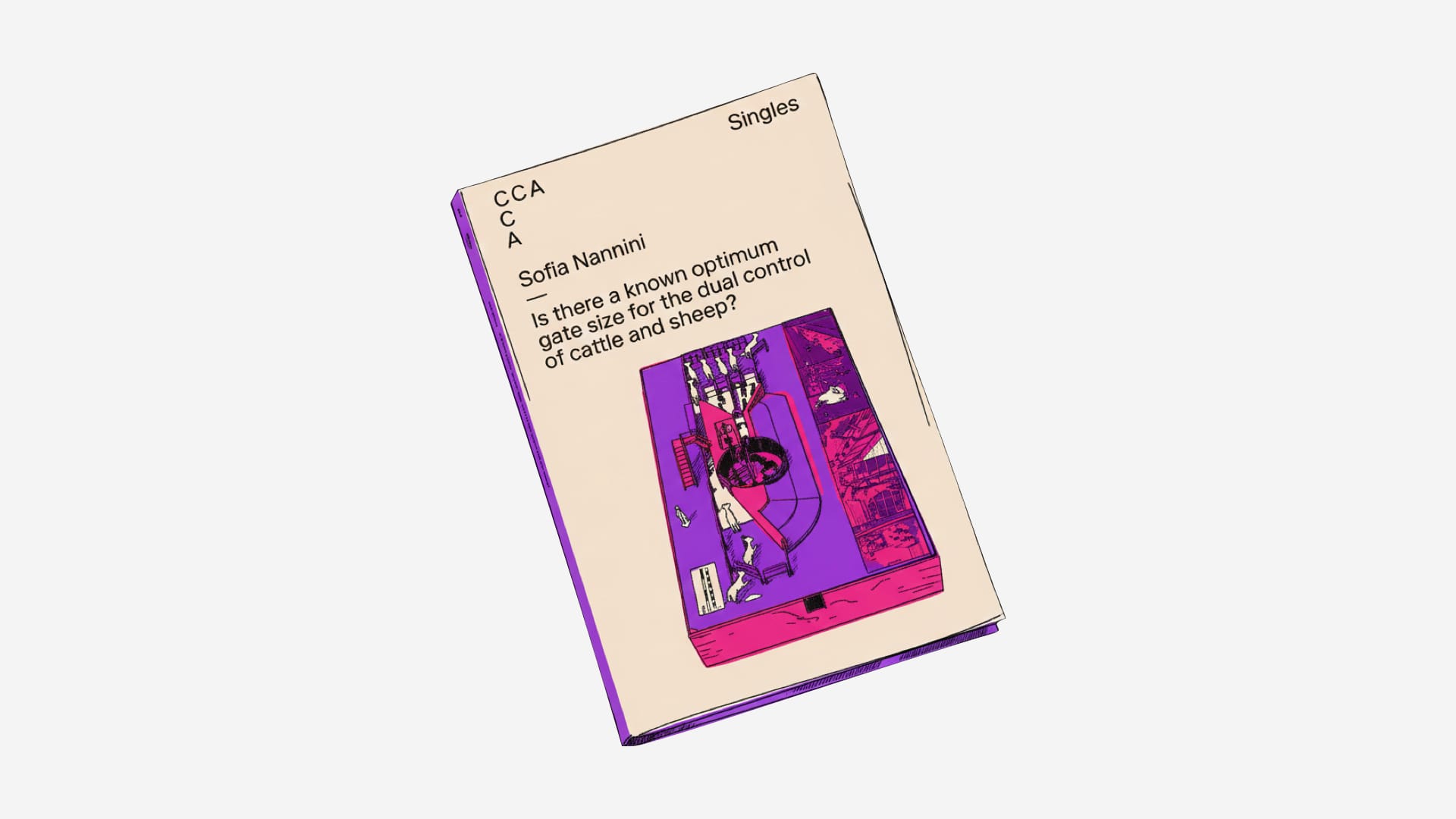
Is there a known optimum gate size for the dual control of cattle and sheep? by Sofia Nannini
CCA Bookstore $18 CAD / Yep! That's the title. This is an essay on Cedric Price’s reconfigurable livestock pen that doubles as a picnic ground, using gate sizes and animal movement as an entry point into questions of control.
Material Reform: Building for a Post-Carbon Future by Material Cultures
MACK, $22 / A systems book about supply chains, resources and time. Ideal for someone who wants to understand why ideas like “low carbon” require an entire reconfiguration of how we build.
Visible upon Breakdown, ed. by Justinien Tribillon, Offshore (Isabel Seiffert & Christoph Miler)
Spector Books, $34 / A photographic and essayistic (?) tour of infrastructure’s hidden wiring (rail lines, pipes, data cables) made visible when things fail. Great for someone who obsesses about things like the BQE Triple Cantilever Repair.
Designing Programmes by Karl Gerstner
Lars Müller, ₣40 / Gerstner shows how to design systems using grids, permutations and constraints as engines for creativity. It’s also a beautiful object unto itself, with tight typography, and rigorous layout that will train the eye every time it's opened.
Walking as Research Practice by Roma Publications
Perimeter Books, $52 / A cluster of essays and projects that treat walking as a method for mapping the city: rhythms, signage, thresholds, maintenance. Good for the person who already notices curbs, drain covers and wayfinding but wants a vocabulary for it.
System Process Form by MuirMcNeil
Thames & Hudson, $95 or Unit Editions (Collector’s Edition) $203 / Essentially a catalog of parametric thinking applied to type and pattern: letterforms generated by rules, rather than taste or tradition. For anyone (even non-type-nerds) who gets a kick out of watching simple systems explode into complexity.
Manuals One: Design & Identity Guidelines by Unit Editions
About $350 used if you know How to Win at eBay / A survey of corporate identity manuals from the era when designers assumed their work would last decades. The pleasure here is seeing how grids, ratios and usage rules build a coherent world. There’s also a Manuals Two, which is also sold out. Maybe try to find an extravagant set?
2. Desk & Workspace
For messy desks and clean desks. For messy minds and clean minds. Also sometimes the office is an airplane.
This Stalogy Notebook
JetPens, $26 / Essentially a dateless (or date-ful) planner that feels like a lab notebook: ultra-thin paper, subtle timeline on each page, tiny grid. It’s for the person who wants to log everything – projects, experiments, life admin – in a single continuous run.
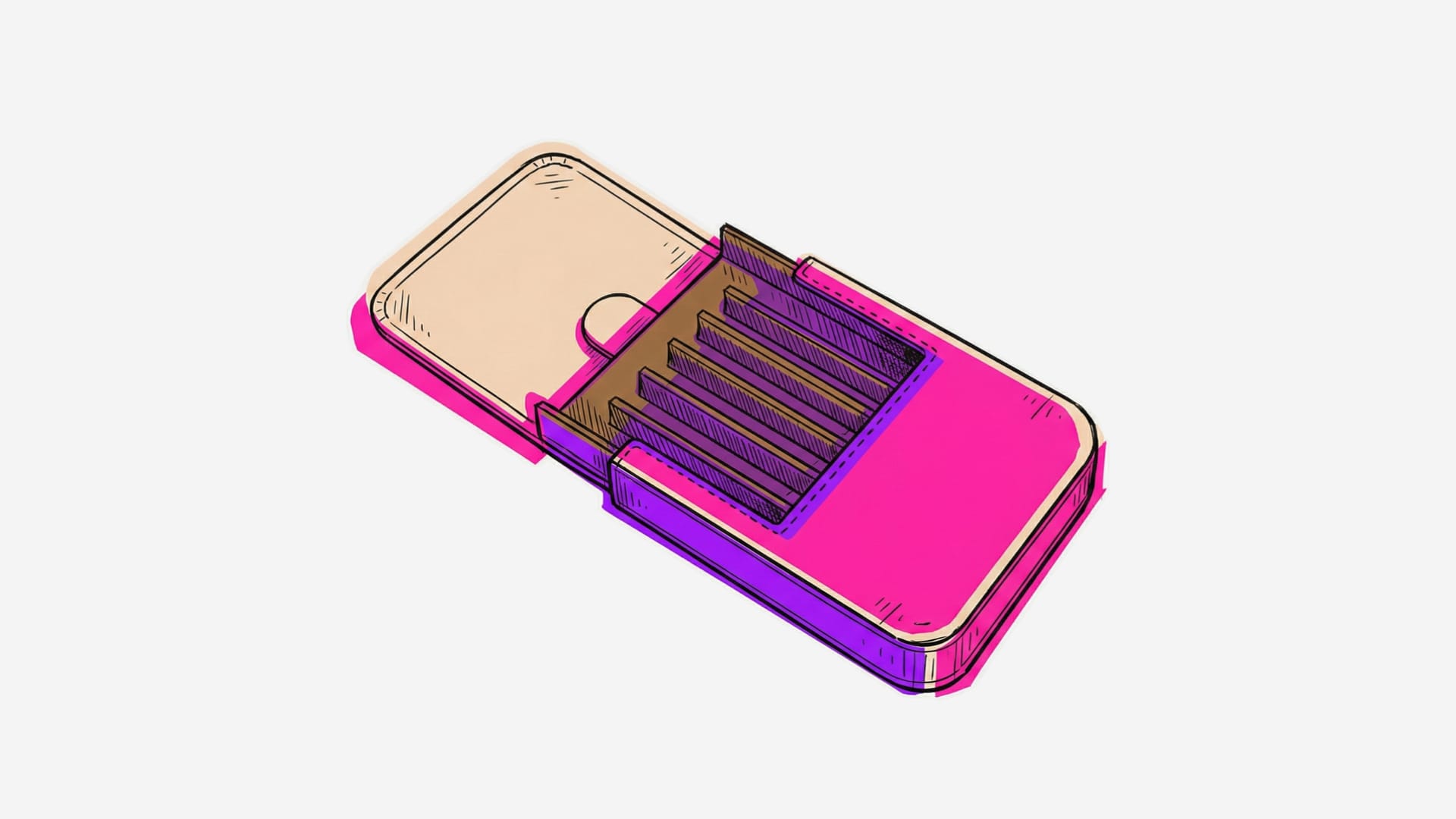
Six Pen Hard Case
Present & Correct, $115 / I like the Undyed Natural finish here, as it’ll get darker and more uniquely theirs over time. Holds six pens for travel and/or safekeeping. Great for the on-the-go facilitator (hi!), though I don’t think the dimensions are right for standard Expo dry-erase markers.
Anglepoise Desk Lamp
Anglepoise, $235 / Iconic for a reason! The spring and arm geometry means the shade stays exactly where you put it. The design goes back to 1950, comes in multiple colors and styles, and is still in production by the company that originally developed it, which is now a B Corp.
Wms&Co. Blackened Bronze Custom Stamp
Wms&Co., also $235 / A dense little block of blackened bronze that turns a recurring mark – a symbol, a project code, a library stamp – into a personal ritual. It's probably overkill for something like "from the desk of," but would be cool for someone building their own internal cataloguing system; you could design the stamp with a few fields to fill in by hand? Also great if somebody recently started their own small business, and wanted to bring a perfectly-imperfect branding moment to outbound material.

3. For Young Systems Thinkers
Nominally these are for kids, but IMO they're for ... ever. Stay young, folks.
Carson MicroBrite Plus Pocket Microscope
Carson, $16 / Small enough for a coat pocket, powerful enough to make everyday things – paper fibers and ink dots – interesting. Maybe a gateway drug into “let’s see how everything is made” field trips around the house.
Majo Ideas
Majo Ideas, ~$70 for a bundle of 3 / An activity zine that teaches kids how pattern, contrast and repetition work by letting them build their own optical illusions. It's a coloring book that reinforces learning grids and variation. It's inspired by iconic artists, so there's an art history lesson, too. Maybe makes going to the museum with little ones even more rewarding? Also offered as a subscription.
Flensted Futura Mobile
Flensted, $104 / Six spheres orbit on a delicate counterweighted frame; the whole thing is basically a lesson in equilibrium disguised as nursery decor. Grows well with a child. Nothing baby-coded about it, but it is still a mobile.
Naef Cella Modular Wooden Puzzle
Naef, $217 / Nine nested shells become rooms, staircases, impossible cubes; spatial reasoning in Swiss hardwood. Rewards the kid (or adult! I want one!) who likes finding every possible configuration before putting it back on the shelf. I like the natural wood, but also comes in colors.
Community Playthings Introductory Unit Block Set
Community Playthings, $340 for an introductory set / 97 blocks in 17 shapes, all cut to the nearest 1/100 of an inch, so structures behave predictably under load. I don't think I really realized that precision manufacturing would be so important to making a thing that inspires play, but it makes sense! Expensive but will last forever and hand down across generations.

4. Home Objects
Cleanup, Store, Beautify
4. Home Objects
Redecker Copper Cloths
Boston General Store, $12 / Finely woven copper threads in double-layered cloths that strip burnt-on junk off pans without shredding the surface (use only when wet). Basically a reusable, recyclable, material-science-based answer to “why are we still buying green plastic scrubbers?” (The actual answer is you're using non-stick, when you could be preheating your stainless steel to the right temp before using it.)
Kamenoko Tawashi Round Brush
Tortoise General Store, $16 / A coconut-fiber donut that’s been doing dishes in Japan for over a century. Designed before commercially available surfactants, when the brush itself had to provide the cleaning power. This also means it's really good for things where you don't want to use soap. Lasts a long time, good for the world, lets you use solid soap if you like.
Redecker Horsehair Indoor Broom Head
Four Corners, $32 / I promise I'm not sponsored by Redecker. They just make cool stuff! Oiled beechwood, dense horsehair, designed to be pulled rather than shoved (TIL!) so the bristles don’t splay and die in a year. With basic care (wash, comb, hang) it’s a decades-long relationship with your floor. So much better than a Swiffer.
Riess Enamel Measuring Jug
Labour & Wait, $46 / An Austrian enamel jug with internal gradations, good enough to go from mixing batter to holding kitchen tools on the counter. In a pinch, you could cook something in it! It’s calibrated, robust, and made by a company that’s been enamelling metal for 450+ years.
Arc Alarm Clock
Nanu Electrics, $299 / One of my favorite purchases of the year. It is very expensive for an alarm clock, but when you get it, you'll understand why. It's super heavy, for one, so it doubles as a bedside weapon for intruders, and every finish, bit of packaging, and even lightweight LED interaction just makes sense. The sound is incredible, soothing, and produced by percussion (not by a speaker, say). And the knob feel is refined.

5. Stays & Experiences
Architecture you can sleep in, systems you can inhabit.
Open House Architecture Weekend
Open House Worldwide, Free! Or Donation-Based! / Once a year, cities open up buildings—from infrastructure to private homes—that you’d never normally see. Plan a trip around one, or stay local.
Week(s)-Long Workshop at Penland School of Craft (North Carolina, US)
Penland School of Craft, ≥$1k / Immersive craft workshops in things like wood, metal, textiles, print, clay. The draw for a systems person isn’t just the making, it’s seeing an institution structured around skill transfer, mentorship and shared equipment. I like Intentional Warp Ikat ($2,200) and Greenwood Technologies ($6,700, yikes? but it's like a month long? you make a chair?), and I'm super impressed that so many of them take all skill levels!
Two Nights at Fogo Island Inn (Newfoundland, Canada)
High four figures for a long weekend, all-inclusive / What if a hotel was a social enterprise? 100% of their operating surpluses go back into the local community, and the architecture is tuned to landscape, weather and pattern of life on a remote Atlantic island. It’s basically a case study in regenerative systems disguised as a very good holiday. Board is included, as are most of their awesome experiences.
A few nights at Castelfalfi (Tuscany, Italy)
Also expensive, and not all-inclusive / A whole Tuscan hilltown converted into a working resort: medieval walls, organic vineyards, biomass plant—and then a proper spa, infinity pool and those stupidly good sunsets over the valley every night. Several restaurants on site (from white-tablecloth to wood-fired pizza in the piazza) mean you can treat it like a tiny, walkable city where everything good is within five minutes on foot. After dinner, you can go boar-sighting in their Land Rovers. Nice. We went here a couple years ago and LOVED it.

6. Subscriptions & Memberships
Ongoing inputs to keep your head and heart well-nourished.
Dossier Magazine
Direct from Dossier, $30/year / A long-running creative network disguised as a travel magazine: born in the indie fashion/art scene, now re-cast as a luxury travel and culture title by the ex-Departures crew. For someone who wants sharp, global stories with proper photography and edits (but none of the usual airport-lounge blandness).
Real Review
Real Review direct, ~£65/year / A tall, sized-to-be-easy-to-hold-in-one-hand sized magazine about “what it means to live today” covering an extremely wide range of topics in review format. A recent issue reviewed synthetic white pigment and run clubs, for example. Two issues per year, and comes with access to a private Discord server.
MacGuffin Magazine
Direct from their publisher? €54 / Each issue picks one thing (N° 15 is about "the stitch" for example…) and then dismantles it across history, manufacturing, sociology, and pure weirdness. For someone who enjoys seeing how a single everyday thing is actually a whole hidden network, it’s perfect. Also 2x per year. I sense a trend.
Local Design / Architecture Museum Membership
Nearest serious institution (Cooper Hewitt–type places), usually $60–150/year / Free admission is great, but the real value here is repeated exposure: seeing how exhibitions are built, how labels evolve, which designers keep showing up in the credits.

8. Tools & Repair
Things to fix other things.
3M Very High Bond (VHB) Tape
Hardware Stores, ~$25–40 / A roll or two of the terrifyingly strong double-sided stuff that holds the world together. A favorite of engineers everywhere; it’s not glamorous, but once you’ve used it to solve a problem, you never un-know it. Use with adult supervision! Comes in many widths. No link because the easiest ones to actually link to are ULINE and Amazon. Sorry!
iFixit Pro Tech Go Toolkit
iFixit, $40 / A compact tool-roll with precision bits (including all the weird Pentalobes), tweezers, picks and spudgers, about half the size of the classic Pro Tech kit, tuned for actual field repairs. Will change how the recipient thinks about “sealed” hardware.
Put together a proper leather-care kit including Saphir Médaille d’Or Products
Where: Shoe repair shops, menswear/sneaker boutiques. / Don't do a pre-packaged one, but a hand-assembled set: cream polish, wax, conditioner, horsehair brushes, daubers, cloths, maybe a spoon-style shoehorn. It changes leather from “thing that wears out” to “thing that evolves with you.” By the way, this doesn't just have to be for shoes! Bags need care, too! Saphir products are the gold-standard for a reason. Youtube is your friend for learning how to use this stuff!

9. Food & Pantry
Process-and system-oriented things to make things for yourself, your family, your friends.
Anson Mills Heirloom Grains
Direct from Anson Mills, ~$12–18 per bag / They cold-mill to order from organic heirloom varieties and ship quickly for freshness, which is nerdy even by grain standards. For the systems-obsessed cook, it’s a tangible lesson in what happens when you treat supply chain and storage as design problems.
Diaspora Co. Single-Origin Spice Tins
Diaspora Co., select grocers. from ~$12 per tin / Equitably sourced spices from South Asian farms, with farmers paid roughly four times commodity rates and shipped in stackable tins. The recipient will taste the difference, but they’ll also appreciate the business model and packaging.
Yamaroku Barrel‑Aged Soy Sauce
Onggi, $45 for 500ml / Fermented 3–5 years in 100‑year‑old cedar barrels, this soy sauce answers the question, "What if condiments could teach you about infrastructure?": slow, layered and slightly ridiculous to use in a stir-fry you’re not paying attention to. Try it on vanilla ice cream! (A thing about me is I like a lil' sip of soy sauce when nobody's looking.)
Weck Jars + Fermentation Weights Starter Stack
Kitchen shops, canning suppliers / Straight-sided glass jars with glass lids and rubber gaskets, plus lids from the next size down as your weight: the basic primitives for kraut, pickles, sourdough starter, whatever. Fermentation is just a controlled system; this gives them the labware to run experiments on their own counter. Also these are great jars for plastic-free food storage and microwaving. Good to have on-hand, in general.
Brightland “The Duo” Olive Oil Gift Set (Alive + Awake)
Brightland, ~$70–80 / Two California extra‑virgin oils – one grassy, one robust – lab-tested to exceed California’s stricter EVOO standards and bottled in UV-protective opaque glass. It’s a nice illustration of how harvest timing, varietals and storage turn into flavor.
Heyyyy, is this marketing‽ Yes.
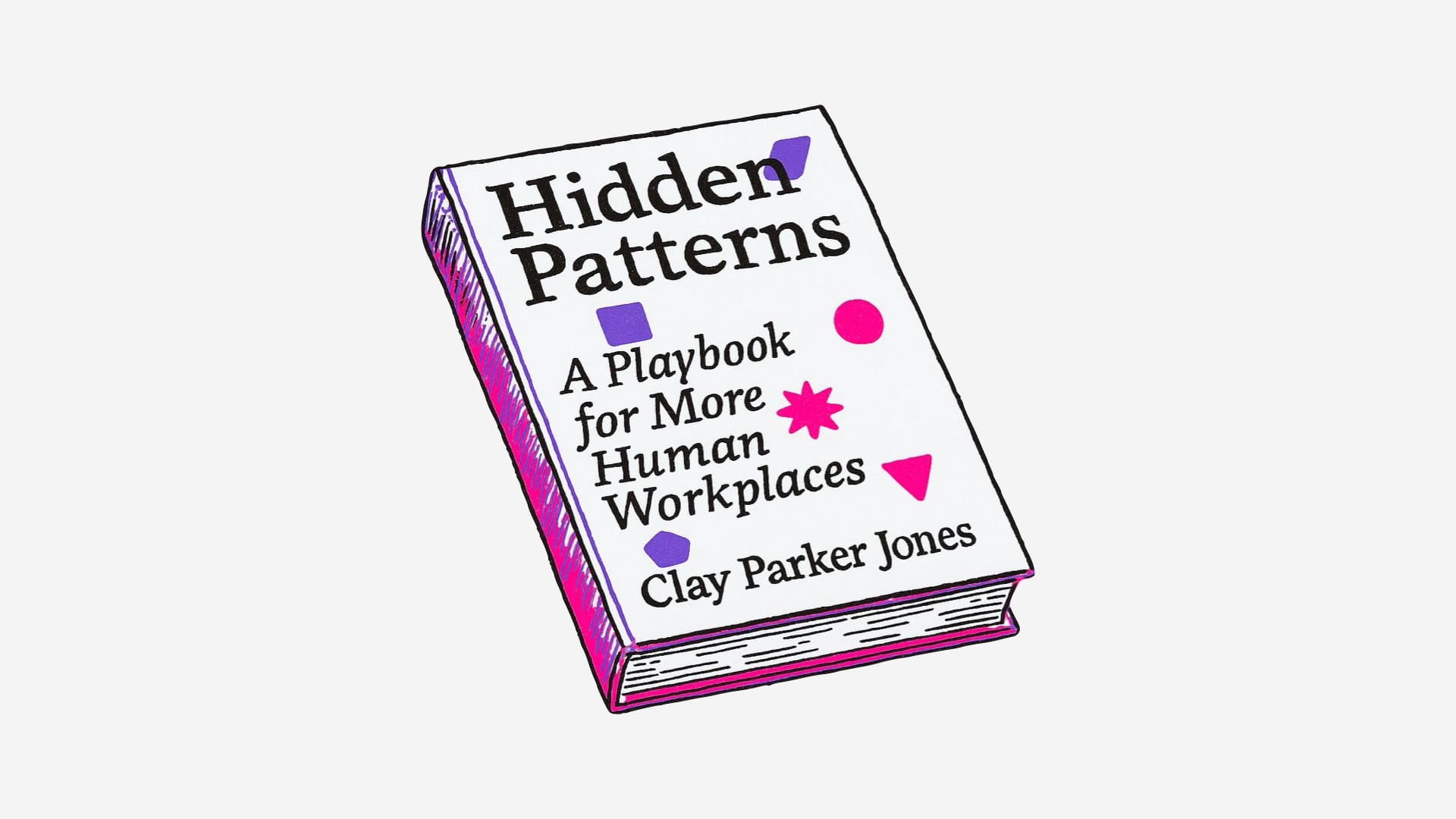
Hidden Patterns by Clay Parker Jones
Simon & Schuster, $32 / Give them the gift they’ve always wanted: dignity at work. They’ll get more done, happier, faster, and more creatively than ever before. The world of work is bleak rn fr fr; what if, in the year ahead, we all tried to make it a bit better and a *lot* more human? (They will have to wait until March to get a physical copy!)
Comments