Observation: It's best to let the magic software machine make software
For now, the best way I’ve found to get useful work (of any kind) out of AI is to treat whatever you're doing like it is a software project. This rounds down to giving agents briefs, material they'll need, and working copies they can change. When they come back with product, I want to see what changed and what they checked on their own. Humans and other agents can then pick up bits of the work without re-reading the entire conversation that produced the output.
For example:
- Doing org design? Adapt a framework like Jesse Vincent’s Superpowers for discovery, design, and review. Put headcount and reporting lines in a database and use scripts to calculate spans, layers, and scenario costs. Give the model a versioned brief, a set of constraints, and a decision log to reason from. Have a separate review pass check the proposed design against the constraints you set at the start.
- Making a deck? Turn previous decks into slide-by-slide Markdown, with speaker notes and slide numbers. Use
AGENTS.mdto make the agent index the research, write up the findings, and outline the narrative before it starts designing. Give every talking point a source reference. Use scripts to check quotations and recalculate figures. Build the slides in Figma with components drawn from your best decks, then review the rendered slides at presentation size. - Writing an essay? Keep the source notes, outline, draft, and editorial passes in separate files. Ask for the strongest case against the argument, with pointers to the passages it would change. Revise those passages and check whether the original sources still support what you’re saying.
- Designing a brand? Have the agent read strategy docs before it opens a moodboard, and make it write a brand platform down as rules before it draws anything. Explore color and type in rounds on a shared canvas, and keep a log of every selection and rejection. Use the personas to check each direction against the brief. Put the strongest ones in front of customers.
Once the work is set up this way, the team can spend more of its time deciding what to try, what good looks like, and which calls it wants to make together. The agent can work from those decisions for a while, and how long depends on the nature of the work.
Complication: What about the work that can't easily be softwared?
Charles Lamanna, who runs Copilot at Microsoft, thinks we’ve designed too much workplace AI around the engineer’s day.
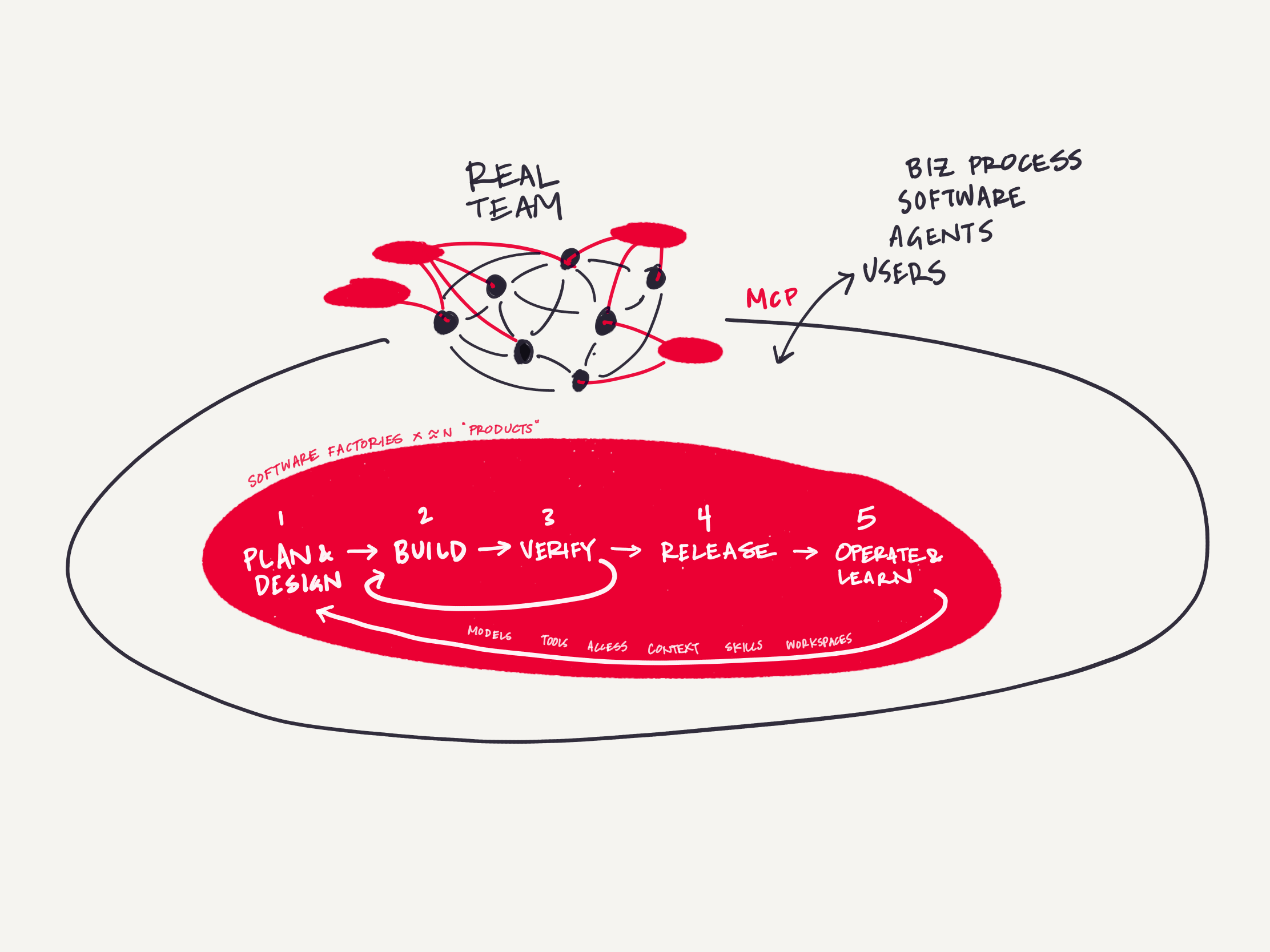
In his conversation with Peter Yang, he describes an engineer taking a ticket, opening a branch, and working alone for a couple of days. A salesperson who spends that long without talking to anyone is, in his words, “probably not a very good salesperson,” and there are lots of jobs that still follow that "high social needs" pattern.
Like running a workshop! Approaching this like a software project, agents can: Transcribe each Post-it into a Markdown file for the session; Give every note an ID and a photo reference, and flag any handwriting you’re unsure about; Keep the transcription alongside the pre-session interviews and research; Propose a theme, citing the notes behind it and surfacing any that complicate it.
As the models get better, I expect them to do more of SDLC-like setup themselves. But that isn't the entirety of the work here.
Negotiation, debate, consent and consensus, conflict, politicking, assisting, relating, wooing: the social process of organizing certainly is amenable to the network effects that software can enable, but most of what creates value here is face-to-face and real-time.
Resolution: Organizations will spend more time generating deep, lasting alignment for large groups, AND transacting between teams
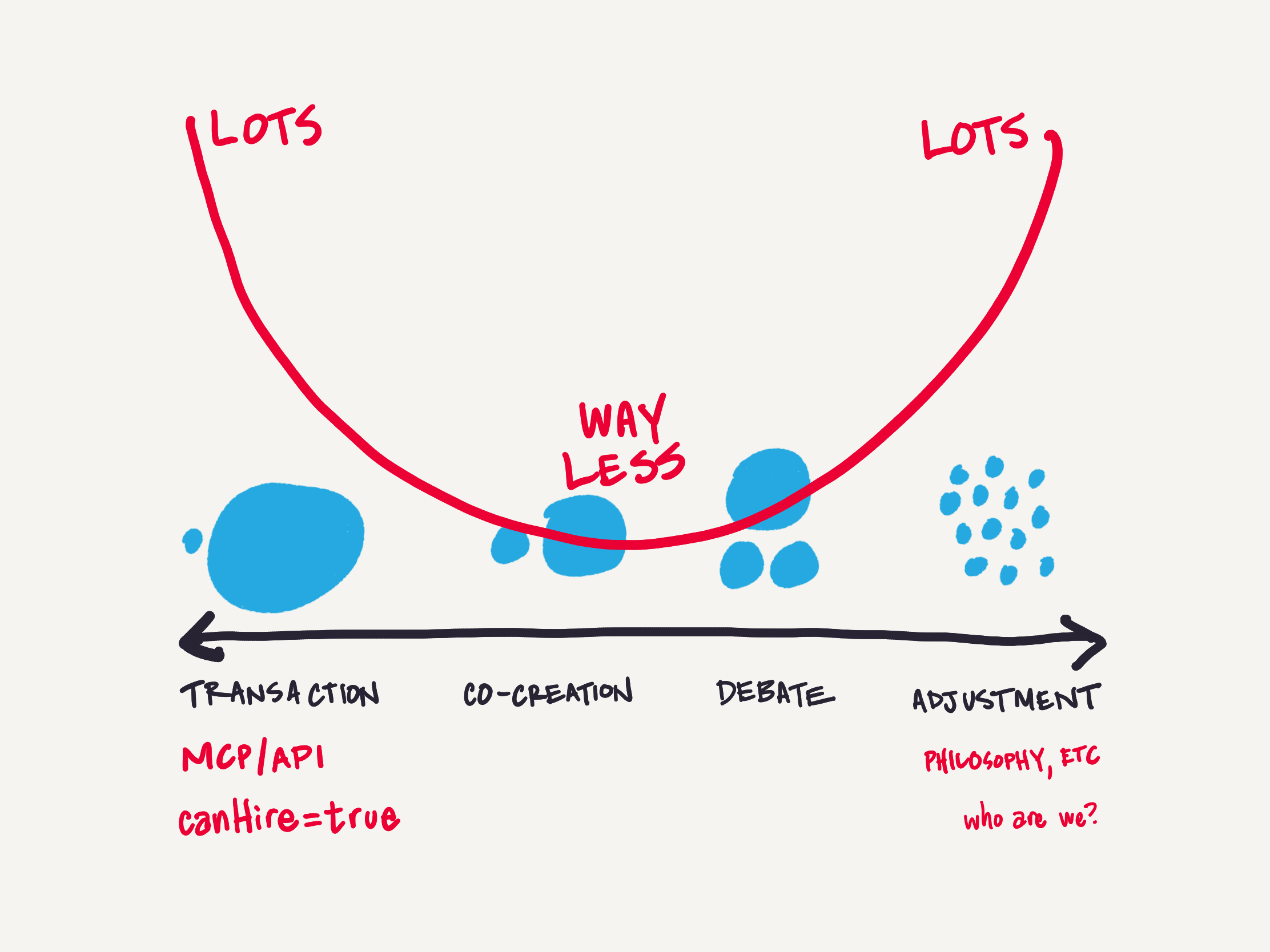
...and less of the messy middle that takes up time without delivering value.
Say the leadership team agrees that it wants to hire more from within. In an LT session, it turns out people mean different things. Some want employees to see every opening before outside candidates do. Others want employees to be able to apply without their manager’s permission. An agent can pull out that distinction and bring it back to the group. The group still has to decide what it’s willing to promise employees.
A team should be able to see whether it can hire the same way it can see how much money it has left. Give it a budget and the authority to decide how to staff itself. When it wants to hire, it can commit the money, book time with recruiting, and open the role in one move. Finance and recruiting see the commitment as soon as it happens.
Now imagine that works for borrowing a designer for six weeks, commissioning customer research, or getting legal support for a pilot. Teams could put together what they need to go after an opportunity while it’s still there. They could take on work that would never justify setting up a permanent team.
In the future, I expect we'll see even more networks of teams, especially in but not limited to the headquarters. Amy Kates and her coauthors give centers of expertise a job they call “design once for everyone”. A corporate function can turn what the company already knows into tools and practices other teams can use. Those teams can try changes in their own work and bring back what they learn.