I decided a few weeks ago that I would try to cover design things on Fridays. I have done a mediocre job of that.
Send the designers to the dump
The nine-month Design Skills for Embedding Circularity pilot published its results September 4. Fifteen designers spent months inside UK waste infrastructure—materials recovery facilities, an electronics recycler, paper mill, energy-from-waste plant, landfills and a remanufacturing operation—before taking on live Biffa and Decathlon briefs covering discarded vapes, lithium batteries, festival tents, tennis balls and reusable packaging. The program was funded by the Chartered Institution of Wastes Management and delivered with the Design Council, WRAP, Circular Economy Institute and URGE Collective.
Pippa Bridges worked on small electronics that make batteries easier to detect and remove before processing. Jonathan Irawan proposed a platform connecting product designers with waste operators. Abby Brazier (product designer at Bibado, among other places) redesigned a toothbrush with a wider base specifically so it would not fall through the holes in industrial sorting trommels (TIL!).
Product designers usually work near users, engineers, suppliers and manufacturing, while waste operators encounter products at the end of their useful life. I have literally had a conversation with a toothbrush product manager who had come to the conclusion that recycling was mostly greenwashing precisely because he knew that all of their toothbrushes passed straight through to the dump. The pilot creates a feedback loop between those groups.
While we're here: I love Dyson as much as the next person, but a $400 toothbrush that needs its own toothpaste?


A minute for the minute
Pennsylvania furniture manufacturer Emeco has sued Zara Home in Hamburg District Court, alleging that Zara’s Stainless Steel Structure Chair ($320) and Bar Stool infringe the appearance and “protected design language” of Emeco’s 20-06 chair (retailing for >$1,000 before retailer discounts) and stool, designed with Norman Foster and Foster + Partners and launched in 2006. Emeco is seeking damages and an end to production and sale; Zara Home has reportedly declined public comment.
Emeco chairman Gregg Buchbinder’s argument is that specialist manufacturers pay for design development, tooling, testing and the risk of discovering whether anyone wants the thing; much larger retailers and dupers can more easily than ever steal share after the design has product-market fit. He calls firms like his “unpaid research and development laboratories.” I'm writing a bit more about this elsewhere, but there's a bit of an AirSpace-for-everything argument in here about slop and homogenization (I don't think anyone wants a world where everything is just the best-next token) that feels even more salient than figuring out whether or not Zara's chair plagiarizes Emeco's.
The other interesting thing to me is where this pushes tastes over time. Foster described the 20-06 as deliberately neutral, and ornament gives you obvious proprietary features. A minimalist design's distinction is in the minute detail: exactly how wide the back is, where a radius begins, how the seat rolls into the leg, whether the frame looks continuous, the visual weight of the tubing.
Does (waves around toward data-centers) all of this mean that we're going to want more ornamental, maximal forms because that's what's more protectable for designers?
Skyline envelopes
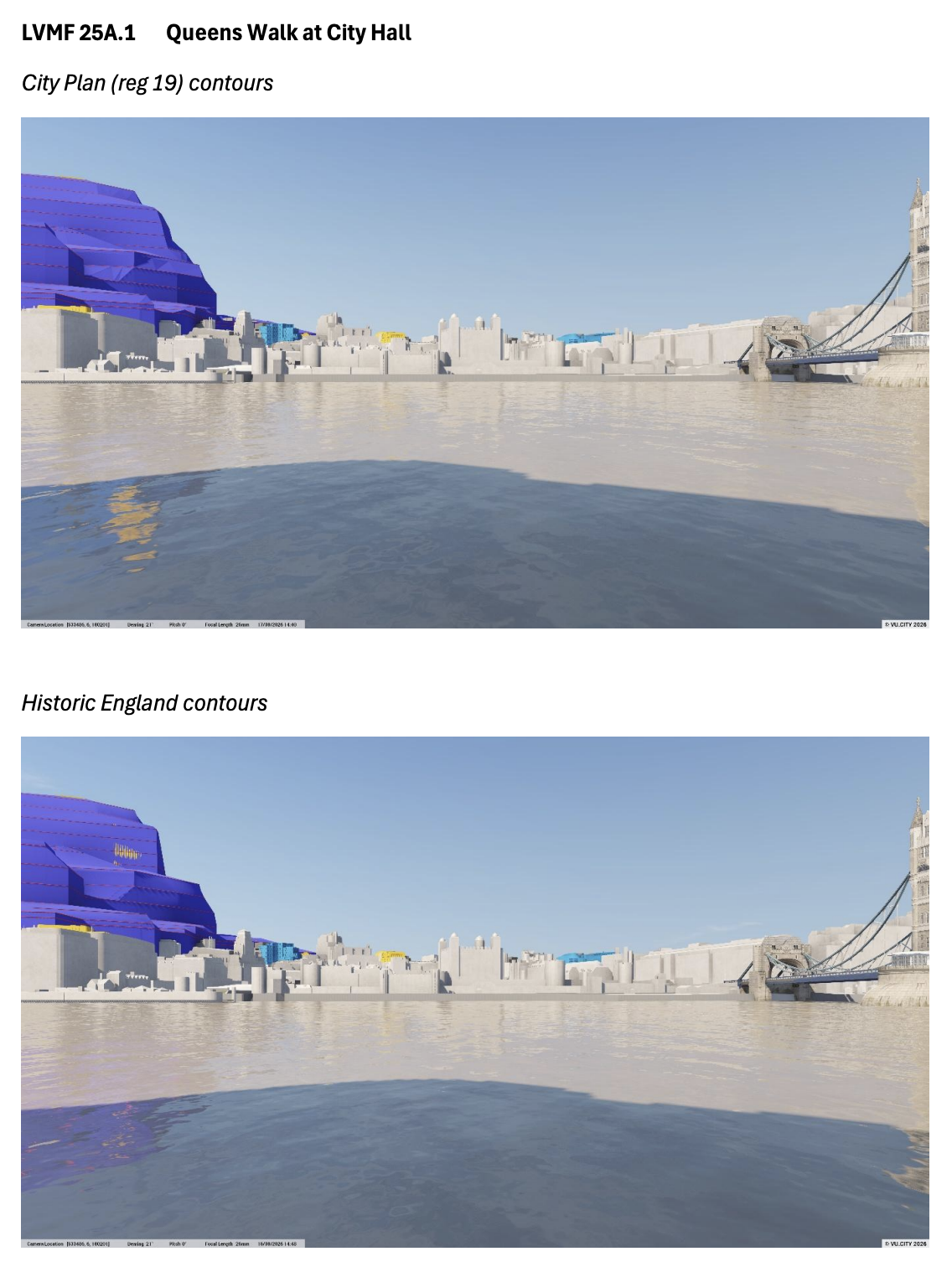
London has spent decades reviewing skyscrapers one at a time. Its new City Plan creates an invisible three-dimensional envelope defining the shape of the future skyline. Some parties, including Historic England, have specific objections. Basically they want the purple shape on the left of the image here, showing where future buildings may be built, to have some restrictions beyond what is proposed.
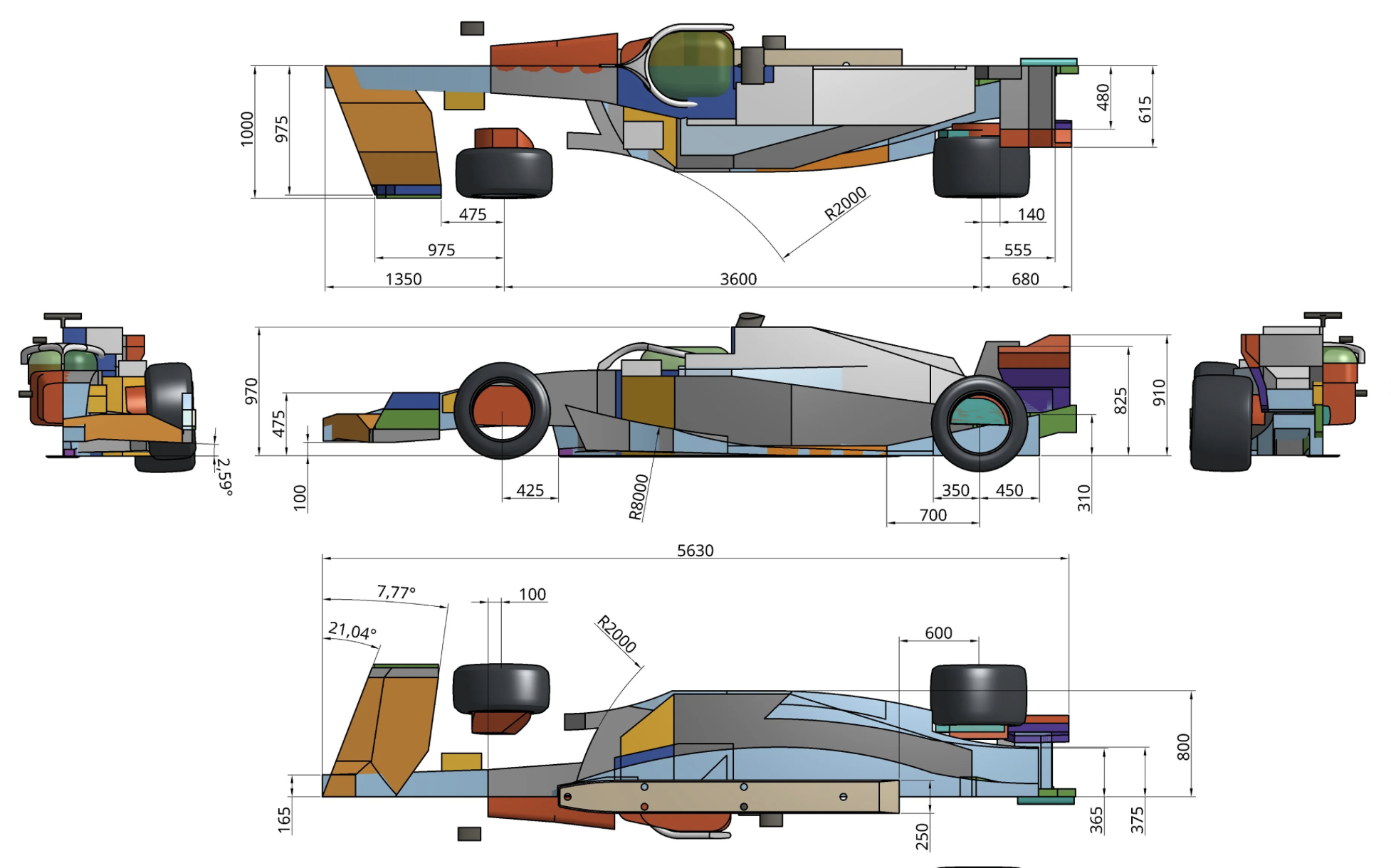
This feels very much like the way that F1 delivers regulations to teams as a prescribed volume within which bodywork is allowed. I don't have much to say beyond a) I think that's neat and b) I love to see how different standards get out into the world.